

About cable ties
A Guide to Cable Tie Sizes and Their Applications
Estimated reading time: 6 minutes
Key Takeaways
- Choosing the correct cable tie size impacts safety, efficiency, and work standards in industrial applications.
- Cable tie dimensions, particularly length and width, directly influence their tensile strength and application suitability.
- Small, medium, heavy-duty, and extra-long cable ties serve different purposes based on the load and environment requirements.
- For optimal results, professionals should assess bundle diameter, weight, and environmental conditions before selecting a cable tie.
- Sourcing high-quality, European-made cable ties ensures reliability and compliance with safety standards.
Selecting the correct cable tie, also known as a zip tie, for an industrial or commercial application is a decision that directly impacts safety, efficiency, and the professional standard of your work. While all cable ties serve to fasten and organise, their performance is dictated by their size, width, and tensile strength. Using a tie that is too small for the load can lead to failure, while one that is too large can be inefficient and wasteful. For electrical contractors, switchboard manufacturers, and industrial technicians, understanding the correlation between cable tie dimensions and their intended applications is essential for compliance and reliability.
This guide provides a definitive overview of common cable tie sizes and their specific uses across professional trades. We will detail how length and width translate to tensile strength and which dimensions are best suited for applications ranging from intricate electronics and switchboard wiring to heavy-duty outdoor construction. By matching the right tie to the right job, you ensure a secure, compliant, and durable installation every time.
Understanding Cable Tie Dimensions: Length, Width, and Strength
The two primary measurements of a cable tie are its length and width. These dimensions are not arbitrary; they are directly related to the tie’s tensile strength, which is the maximum pulling force it can withstand before breaking.
- Length: The length determines the maximum bundle diameter the tie can accommodate. It is critical to choose a length that provides enough slack to comfortably wrap around your bundle without being excessively long, which would require trimming and create waste.
- Width: The width of the tie is the main contributor to its tensile strength. A wider tie has more material and a more robust locking mechanism, allowing it to handle heavier loads and greater physical stress.
- Tensile Strength: Measured in kilograms (kg), this is the most critical specification for industrial applications. It indicates the load-bearing capacity of the tie. A higher tensile strength is essential for securing heavy cables, pipes, or components in high-vibration or high-stress environments.
Our European-made cable ties are manufactured from high-quality Polyamide Nylon 6.6, ensuring that their specified tensile strength is consistent and reliable.
Small Cable Ties: Precision for Electronics and Light-Duty Work
Typical Sizes:
- Length: 98mm – 140mm
- Width: 2.5mm – 3.5mm
Recommended products
-

98mm long x 2.5mm wide natural nylon cable ties (1000pk)
$18.00 -
98mm long x 2.5mm wide black nylon cable ties (1,000pk)
$18.00 -
135mm long x 2.5mm wide natural nylon cable ties (1,000pk)
$41.00 -
135mm long x 2.5mm wide black nylon cable ties (1,000pk)
$41.00 -
140mm long x 3.5mm wide black nylon cable ties (100pk)
$5.00 -
140mm long x 3.5mm wide black nylon cable ties (1,000pk)
$48.00 -
140mm long x 3.5mm wide natural nylon cable ties (100pk)
$5.00 -
140mm long x 3.5mm wide Natural Nylon Cable Ties (1,000pk)
$48.00
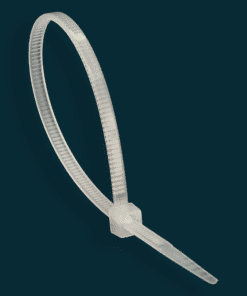
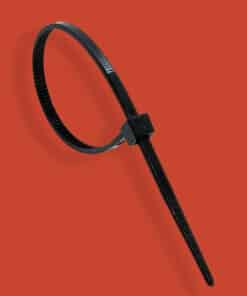
Small cable ties are engineered for precision and are indispensable in applications where space is limited and bundling requirements are delicate. Their slender profile makes them perfect for organising fine wires inside control panels, securing small components on a printed circuit board (PCB), or managing data cables within a network rack.
For switchboard manufacturers and electronics technicians, these ties allow for neat and secure wire management without exerting excessive pressure that could damage sensitive conductors or insulation. Their low profile ensures they do not obstruct other components within a crowded enclosure. They are the go-to solution for light-duty bundling, prototyping, and any task that demands a precise, non-intrusive fastening solution.
Medium Cable Ties: The Workhorse for General Electrical and Commercial Use
Typical Sizes:
- Length: 200mm – 300mm
- Width: 3.5mm – 7.5mm
Recommended products
-
200mm long x 2.6mm wide natural nylon cable ties (100pk)
$5.00 -
200mm long x 2.6mm wide black nylon cable ties (100pk)
$5.00 -
200mm long x 2.6mm wide natural nylon cable ties (1,000pk)
$55.00 -
200mm long x 2.6mm wide black nylon cable ties (1,000pk)
$55.00 -
200mm long x 3.5mm wide natural nylon cable ties (100pk)
$8.00 -
200mm long x 3.5mm wide black nylon cable ties (100pk)
$8.00 -
200mm long x 3.5mm wide natural nylon cable ties (1000pk)
$73.00 -
200mm long x 3.5mm wide black nylon cable ties (1000pk)
$73.00 -
250mm long x 4.8mm wide natural nylon cable ties (100pk)
$12.00 -
250mm long x wide 4.8mm black nylon cable ties (100pk)
$12.00 -
290mm long x 4.5mm wide natural nylon cable ties (100pk)
$14.00 -
290mm long x 4.5mm wide black nylon cable ties (100pk)
$14.00 -
300mm long x 7.5mm wide natural nylon cable ties (100pk)
$27.00 -
300mm long x 7.5mm wide black nylon cable ties (100pk)
$27.00
Medium-sized cable ties are the most versatile and widely used fasteners in the electrical trade. They offer a balanced combination of flexibility and strength, making them suitable for a vast range of applications. These are the workhorses for general cable management inside commercial buildings, industrial panels, and workshops.
Electrical contractors rely on these ties for bundling multiple circuits within a switchboard, securing wiring looms in automotive applications, and organising cables in data communication installations. Their tensile strength is sufficient to hold moderate-weight bundles securely, preventing sag and maintaining neat, organised runs. The 4.8mm width, in particular, provides a significant step up in strength, making it ideal for securing heavier cables and conduits without moving to a heavy-duty classification. These ties deliver the proven reliability needed for most day-to-day electrical and commercial projects.
Heavy-Duty Cable Ties: Maximum Strength for Industrial and Outdoor Applications
Typical Sizes:
- Length: 360mm – 720mm
- Width: 7.5mm – 12.5mm
Recommended products
-
365mm long x 7.5mm wide natural nylon cable ties (100pk)
$31.00 -
365mm long x 7.5mm wide black nylon cable ties (100pk)
$31.00 -
450mm long x 7.5mm wide Black Nylon Cable Ties (100pk)
$54.00 -
500mm long x 12.5mm wide black nylon cable ties (50pk)
$63.00 -
720mm long x 12.5mm wide black nylon cable ties (50pk)
$75.00
When the application demands maximum holding power, heavy-duty cable ties are the only option. Engineered with substantial width and a robust locking mechanism, these ties provide superior tensile strength for securing the heaviest and most demanding loads. They are essential in industrial, construction, and outdoor environments where fastenings are subjected to significant stress, vibration, and environmental exposure.
For construction site managers, these ties are used to secure temporary fencing, fasten heavy-duty cables to scaffolding, or bundle large-diameter conduits. In manufacturing plants, they reliably hold hydraulic lines, heavy electrical feeders, and components on machinery. For outdoor use, black UV-stabilised heavy-duty cable ties are critical. Made with a carbon black additive, they resist degradation from sunlight, ensuring long-term performance when exposed to the elements.
Extra-Long Cable Ties: For Large Diameter Bundling
Typical Sizes:
- Length: 850mm – 1000mm
- Width: 12.5mm
Recommended products
For applications involving exceptionally large bundles, extra-long cable ties provide a simple and effective solution. These ties are designed to wrap around large-diameter pipes, HVAC ducting, or massive bundles of industrial cables. Their significant length eliminates the need to daisy-chain smaller ties together—a practice that creates multiple potential failure points and is not recommended for professional work.
Combined with a substantial width of 12.5mm, these ties offer immense tensile strength, ensuring that even the largest and heaviest objects are held securely. They are a vital component for major industrial installations, civil engineering projects, and any scenario where standard lengths are insufficient.
Choosing the Right Size: Practical Tips for Professionals
- Measure Your Bundle Diameter: Before selecting a tie, determine the diameter of the cable or conduit bundle. Choose a tie length that is at least one-third longer than the circumference to ensure you have enough length to easily thread and tighten the tie.
- Assess the Weight and Stress: Consider the weight of the items being secured and the environmental conditions. For heavy bundles, high-vibration areas, or critical infrastructure, always select a tie with a higher tensile strength. It is always better to over-specify than to risk failure.
- Consider the Environment: For any outdoor application where the tie will be exposed to sunlight, you must use a black, UV-stabilised cable tie. Standard natural cable ties may become brittle and fail under direct and prolonged sun exposure. For areas with chemical exposure, confirm the tie material (Polyamide Nylon 6.6) is resistant to the specific substances.
- Prioritise Quality: The specified dimensions and strength ratings are only meaningful if the product is manufactured to a high standard. Sourcing high-quality, European-made cable ties from a trusted supplier ensures consistency and reliability.
The Definitive Choice for Professionals
Understanding the different sizes of cable ties and their corresponding applications is fundamental to achieving a safe, compliant, and professional finish. From the precision of a 2.5mm tie in an electronics panel to the brute strength of a 12.5mm tie on a construction site, each size is engineered for a specific purpose.
By taking a moment to assess the load, environment, and required bundle diameter, Australian trade professionals can select the correct cable tie with confidence. This simple step ensures the integrity of your work, enhances operational safety, and upholds the standard of quality your clients expect.
Dimensions and tensile strength ratings may vary by manufacturer. Always verify specifications on product datasheets for your specific application requirements.