About cable ties
How to Spot High-Quality Cable Ties: What to Look For
Estimated reading time: 5 minutes
Key Takeaways
- Choose high-quality cable ties to ensure project reliability and safety.
- Look for cable ties made from 100% Polyamide Nylon 6.6 for strength and durability.
- Check tensile strength ratings and ensure the ties can withstand specific weight requirements.
- Select cable ties with appropriate temperature and flammability ratings for safety in industrial environments.
- Verify the manufacturing origin and certifications to ensure consistent quality and performance.
In any professional trade, the quality of your components determines the quality of your work. For electrical contractors, switchboard manufacturers, and industrial maintenance technicians, even a component as common as a cable tie must meet a high standard of performance. A substandard tie that fails under stress, heat, or environmental exposure can lead to project delays, costly rework, and significant safety hazards. Choosing a high-quality cable tie is not an incidental detail; it is a critical decision that impacts reliability and professionalism.
However, not all cable ties are created equal. The market is filled with options that vary widely in material, strength, and durability. For professionals who require absolute assurance that their fastenings will hold firm in demanding industrial conditions, it is essential to know what to look for. This guide provides practical, clear criteria for identifying premium, industrial-grade cable ties that deliver proven reliability and performance.
1. Material Quality: The Foundation of Performance
The single most important factor in a cable tie’s performance is the material from which it is made. For industrial and commercial applications, the definitive material is Polyamide Nylon 6.6.
Polyamide Nylon 6.6 is a high-performance polymer engineered for exceptional strength, stiffness, and thermal stability. Its molecular structure results in a product that can withstand significant mechanical stress without failing. Unlike generic plastics or lower-grade nylons, Polyamide Nylon 6.6 provides the resilience needed for bundling heavy cables, securing conduits, and performing in environments where component failure is not an option.
When sourcing cable ties, you must verify that they are constructed from 100% virgin Polyamide Nylon 6.6. Some manufacturers use recycled materials or fillers, which can compromise the tie’s integrity, leading to brittleness and a higher failure rate. Our European-made cable ties are constructed entirely from premium Polyamide Nylon 6.6, ensuring consistent quality and performance.
2. Tensile Strength: The Measure of Holding Power
A cable tie’s primary function is to secure items, and its ability to do so is measured by its tensile strength. This rating indicates the maximum pulling force the tie can endure before it breaks. For professional use, this is a non-negotiable specification.
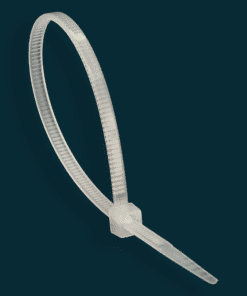
Tensile strength is directly related to the width of the cable tie. A wider tie will generally have a higher tensile strength. However, the quality of the material and the integrity of the locking mechanism are also critical. A high-quality tie will have a robust pawl (the locking tooth) and a well-moulded head that engages securely with the strap’s serrations.
When evaluating cable ties, look for clear specifications on tensile strength, usually measured in kilograms (kg) or pounds (lbs). Match the strength rating to your application. For heavy-duty applications, such as securing large cable bundles in a switchboard or fastening components in a high-vibration environment, a higher tensile strength is essential for long-term reliability.
3. Temperature and Flammability Ratings
Industrial environments often involve exposure to extreme temperatures. Electrical panels, manufacturing equipment, and engine bays can generate significant heat that will cause inferior plastics to soften, stretch, and ultimately fail.
A high-quality Polyamide Nylon 6.6 cable tie is engineered for thermal stability. It maintains its structural integrity across a wide operational temperature range, ensuring it remains strong and effective even when used near heat sources. Look for products that specify a continuous operating temperature suitable for your environment.
Equally important is the material’s flammability rating. For any electrical work, components must meet strict fire safety standards. The standard to look for is UL 94, which is a plastics flammability standard from Underwriters Laboratories. A rating of UL 94 V2 signifies that the material is self-extinguishing within 30 seconds of flame removal, providing an important level of fire safety for electrical installations and will not spread fire by dripping flaming particles. This is a critical safety feature for installations in switchboards, data centres, and other areas where an electrical fault could pose a fire risk. Compliance is not optional.
4. Resistance to Environmental Factors
For applications exposed to the elements, standard nylon cable ties may not be sufficient. UV radiation from sunlight can degrade nylon over time, causing it to become brittle and fail.
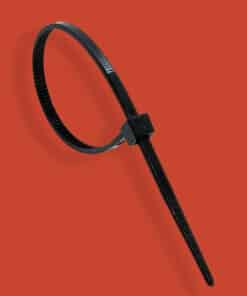
For outdoor use or installations in direct sunlight, it is crucial to use UV-resistant cable ties. These are typically black and are manufactured with a carbon black additive. This stabiliser protects the polymer structure from UV degradation, ensuring long-term durability and performance. Using a non-UV-stabilised tie outdoors is a common mistake that leads to premature failure.
Furthermore, consider chemical resistance. Industrial sites often have oils, greases, solvents, and other chemicals present. Polyamide Nylon 6.6 offers excellent resistance to these substances, ensuring the tie does not become weak or brittle upon exposure. Always check the manufacturer’s data sheet for information on chemical compatibility if you are working in a particularly harsh chemical environment.
5. Manufacturing Origin and Certifications
The country of origin can be a strong indicator of manufacturing quality and consistency. European-made cable ties, for example, are produced under stringent quality control standards. This ensures consistency from batch to batch, so you can be confident that every tie in the pack meets the specified performance criteria.
Look for manufacturers who are transparent about their production processes and provide relevant certifications. A Quality Endorsed Company, for instance, adheres to documented procedures that ensure a high level of product quality and customer service. Certifications like ISO 9001 demonstrate a commitment to quality management systems. These indicators provide assurance that you are purchasing a product engineered for toughness and reliability, not one made to the lowest possible cost.
The Professional’s Choice
For Australian electrical professionals, specifying the right components is fundamental to delivering safe, compliant, and durable work. When it comes to cable ties, the difference between a premium product and a low-cost alternative is significant.
By prioritising Polyamide Nylon 6.6, verifying tensile strength, checking temperature and flammability ratings, and choosing UV-resistant options for outdoor use, you can ensure your installations are secure and professional. Investing in high-quality, European-standard cable ties is an investment in reliability, efficiency, and the reputation of your business.
Cable Ties
-

140mm long x 3.5mm wide natural nylon cable ties (100pk)
$5.00 -
140mm long x 3.5mm wide black nylon cable ties (100pk)
$5.00 -
200mm long x 2.6mm wide black nylon cable ties (100pk)
$5.00 -
200mm long x 2.6mm wide natural nylon cable ties (100pk)
$5.00 -
200mm long x 3.5mm wide black nylon cable ties (100pk)
$8.00 -
200mm long x 3.5mm wide natural nylon cable ties (100pk)
$8.00 -
250mm long x 4.8mm wide natural nylon cable ties (100pk)
$12.00 -
250mm long x wide 4.8mm black nylon cable ties (100pk)
$12.00 -
290mm long x 4.5mm wide natural nylon cable ties (100pk)
$14.00 -
290mm long x 4.5mm wide black nylon cable ties (100pk)
$14.00 -
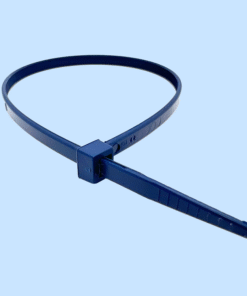
98mm long x 2.5mm wide blue metal detectable nylon cable ties (100pk)
$16.00 -
360mm long x 4.5mm wide natural nylon cable ties (100pk)
$17.00 -
360mm long x 4.5mm wide black nylon cable ties (100pk)
$17.00 -
98mm long x 2.5mm wide natural nylon cable ties (1000pk)
$18.00 -
98mm long x 2.5mm wide black nylon cable ties (1,000pk)
$18.00 -
140mm long x 3.5mm wide blue metal detectable nylon cable ties (100pk)
$22.00 -
300mm long x 7.5mm wide natural nylon cable ties (100pk)
$27.00 -
300mm long x 7.5mm wide black nylon cable ties (100pk)
$27.00 -
365mm long x 7.5mm wide natural nylon cable ties (100pk)
$31.00 -
365mm long x 7.5mm wide black nylon cable ties (100pk)
$31.00 -
200mm long x 3.5mm wide blue metal detectable nylon cable ties (100pk)
$33.00 -
200mm long x 4.5mm wide blue metal detectable nylon cable ties (100pk)
$40.00 -
135mm long x 2.5mm wide natural nylon cable ties (1,000pk)
$41.00 -
135mm long x 2.5mm wide black nylon cable ties (1,000pk)
$41.00 -
140mm long x 3.5mm wide Natural Nylon Cable Ties (1,000pk)
$48.00 -
140mm long x 3.5mm wide black nylon cable ties (1,000pk)
$48.00 -
450mm long x 7.5mm wide Black Nylon Cable Ties (100pk)
$54.00 -
200mm long x 2.6mm wide natural nylon cable ties (1,000pk)
$55.00 -
200mm long x 2.6mm wide black nylon cable ties (1,000pk)
$55.00 -
500mm long x 12.5mm wide black nylon cable ties (50pk)
$63.00 -
290mm long x 4.5mm wide blue metal detectable nylon cable ties (100pk)
$68.00 -
200mm long x 3.5mm wide natural nylon cable ties (1000pk)
$73.00 -
200mm long x 3.5mm wide black nylon cable ties (1000pk)
$73.00 -
360mm long x 4.5mm wide blue metal detectable nylon cable ties (100pk)
$74.00 -
720mm long x 12.5mm wide black nylon cable ties (50pk)
$75.00 -
850mm long x 12.5mm wide black nylon cable ties (50pk)
$86.00 -
1000mm long x 12.5mm wide black nylon cable ties (50pk)
$99.00 -
365mm long x 7.5mm wide blue metal detectable nylon cable ties (100pk)
$130.00